
What R-Value Do You Need for Attic Insulation in North Las Vegas, NV?
For a North Las Vegas attic, you need a minimum of R-38 to meet Nevada’s energy code for Climate Zone 3B, but R-49 is the smarter target for most existing homes here. The jump from R-38 to R-49 costs very little at installation and pays that difference back in roughly two cooling seasons in a city where the AC runs five or six months a year. If you want a measured answer instead of a guess, call (844) 797-3662 and we’ll read your actual attic depth before you spend a dime.
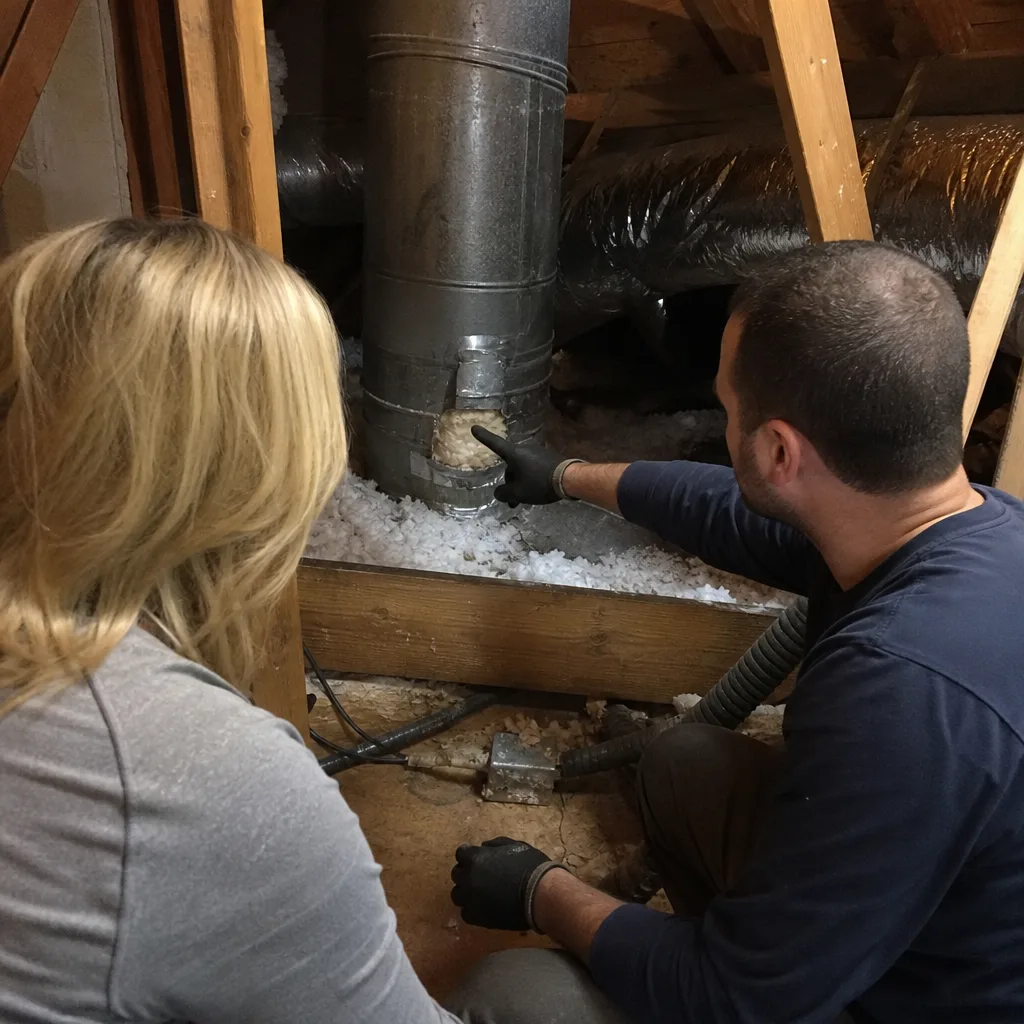
Why R-38 Is the Floor and R-49 Is the Target in North Las Vegas
Most R-value guides online reproduce the Department of Energy’s national zone map and stop there. That’s a problem for anyone living in North Las Vegas, because the generic map doesn’t explain how the number plays out in a desert where attic temperatures climb past 150°F by mid-July.
Nevada’s adopted energy code places North Las Vegas in Climate Zone 3B. For an existing attic, the code floor is R-38. New construction after the 2018 code cycles moved that target to R-49. That gap is the whole story: your home may technically pass at R-38, but the code itself acknowledges R-49 performs better in this climate.
The reason comes down to diminishing returns. Going from R-19 to R-38 roughly halves the heat gain coming through your ceiling. Going from R-38 to R-49 cuts another meaningful slice. Push past R-49 in a typical single-story, slab-on-grade North Las Vegas home and the curve flattens fast. At that point, the remaining heat isn’t coming through the insulation at all. It’s coming through leaky ductwork and unsealed attic bypasses, which is a separate fix.
The Two-Story Wrinkle Nobody Mentions
North Las Vegas is full of two-story tract homes with tile roofs, and this creates a confusion we see constantly. Second-floor bedrooms sit directly under the roof deck and get the worst of the heat. Those ceilings sit above the attic floor and benefit most from hitting R-49 or higher. The first-floor ceiling, meanwhile, has living space above it, not attic, so it needs zero attic insulation on that side.
In plain terms: don’t expect us to “insulate the whole ceiling.” The valuable square footage is the attic floor over the upstairs rooms and any vaulted areas. Knowing that shapes where the budget should go.
What R-Value Is Actually in Your North Las Vegas Attic Right Now?
Probably less than you think. Most homes built during the mid-2000s subdivision boom, including large swaths of Aliante and the neighborhoods off the I-215 beltway, left the builder with blown fiberglass at R-19 to R-22. Fiberglass settles over time. After 15 to 25 years, that original R-19 has likely dropped to an effective R-15 or R-17.
So when a homeowner reads their builder documents and sees “R-19,” the real gap to R-49 is wider than the paperwork suggests. In North Las Vegas, this is the single most common mismatch we find.
There’s a second issue hiding in those same attics. The original flex-duct runs above garages and back bedrooms are frequently collapsed, kinked, or disconnected. In July, a technician climbing into one of these attics often finds two problems stacked on top of each other: settled insulation and duct leaks that explain why the back of the house never cools, no matter what the thermostat says.
Measure It, Don’t Eyeball It
Guessing depth from the access hatch gets you a bad number. The right way is to take depth readings at multiple points across the attic floor, because blown insulation is rarely even. A home energy audit gives you a real measured R-value along with a duct leakage picture, so you know exactly which rooms need more coverage and which don’t. That’s the diagnostic step that makes every other insulation decision smarter.
How Much Does It Cost to Hit Code in North Las Vegas?
Here’s the practical part. Bringing a settled attic up to R-38 costs less than pushing it to R-49, and the incremental difference to reach R-49 is small compared to the comfort and bill impact. These are typical ranges for North Las Vegas homes, and we confirm exact numbers after the audit:
| Scope | Typical Range |
|---|---|
| Energy audit with measured R-value readings | $200 – $450 |
| Blown-in upgrade to R-38 (most 1,500-2,000 sq ft attics) | $1,200 – $1,900 |
| Blown-in upgrade to R-49 | $1,450 – $2,300 |
| Attic air sealing (added to insulation) | $400 – $900 |
| Duct sealing for collapsed or disconnected runs | $350 – $800 |
That R-38 to R-49 jump, usually a few hundred dollars, is the whole point of this page. We install material from CertainTeed and GreenFiber, so the products behind that number are ones you can look up.
Most jobs are completed in a single visit. We also have three standing offers we don’t change on a whim: $50 off any repair over $250, an $89 seasonal tune-up, and a permanent 5% senior and veteran discount. Pricing is quoted upfront, and every job is backed by our 90-Day Done Right Promise. If the work isn’t right, we make it right.
A Quick Decision Checklist
- Under R-19 (settled from an older R-22): you’re well below code. Go to R-49 in one step.
- R-19 to R-38: you’ll pass code but leave savings on the table in summer.
- At or near R-38: the marginal cost to R-49 is small. Take it.
- Above R-49 with ducts still leaking: stop adding insulation. Seal the ducts and attic bypasses first.
For the full picture of what we install and how, see our insulation installation in North Las Vegas page, or start from our home page to see the ten services we cover under one contractor.
Frequently Asked Questions
R-38 is the legal minimum for existing homes here under Nevada’s Climate Zone 3B code, and R-49 is the practical target for most North Las Vegas attics. The extra cost to reach R-49 is small at installation and pays back in about two cooling seasons. Call (844) 797-3662 for a measured reading before you choose.
Yes, usually, but only if your ductwork is also sealed. Insulation slows heat gain from the attic; duct sealing stops cooled air from escaping into that 150°F attic space. In North Las Vegas homes, the two together deliver the bill reduction homeowners expect. A free estimate will tell you which one you actually need.
You almost certainly don’t know it from the paperwork. Builder documents usually show the original spec, while settled fiberglass has likely dropped two to four R-points since then. Depth readings at multiple attic points give you a real number. Call (844) 797-3662 and we’ll measure it during a home energy audit, so you’re not buying insulation you don’t need.
Often yes, but not always, and the decision depends on what’s underneath. Settled fiberglass can usually be topped off after air sealing. If there’s rodent damage or water intrusion, removal and replacement comes first. Our technicians have up to 15 years of experience and most jobs finish in one visit, backed by the 90-Day Done Right Promise.
If you’d rather have it looked at than guess, Warmline Insulation North Las Vegas offers a no-pressure assessment in North Las Vegas. We’re licensed and insured, and a live person answers every call, day or night. Call (844) 797-3662 for a free estimate.
Written by the team at Warmline Insulation North Las Vegas, serving North Las Vegas, NV.