
How Does a Radiant Barrier Work in North Las Vegas? Reflections, Air Gaps, and 150°F Attics
A radiant barrier works by reflecting infrared radiation back toward the roof deck before it can conduct into the insulation below. A low-emissivity foil surface facing an air gap sends 95% or more of that incoming radiant heat back the way it came, which means the heat never gets a chance to become the conducted heat your attic insulation is designed to slow. In North Las Vegas, that reflection matters more than almost anywhere else in the country, because the heat load here hits harder and faster than the generic explanations assume.
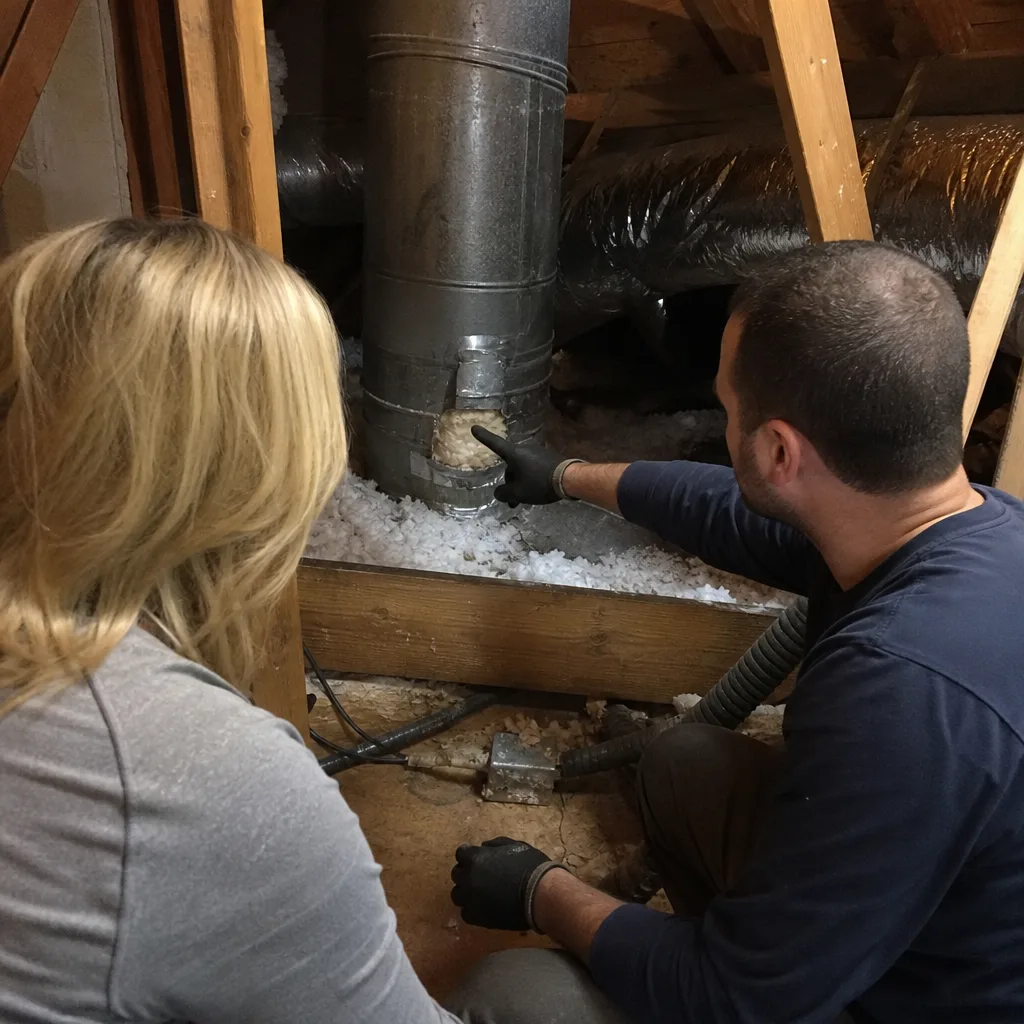
Heat arrives at your attic in three ways. Conduction is what insulation handles. Convection is what ventilation handles. Radiation is the one most homeowners never hear about, and on a 110°F North Las Vegas afternoon it’s the biggest piece of the puzzle. The numbers below are drawn from what we actually see in local attics, not from a national article written for a temperate climate. If you’d like to skip the physics and get a straight answer about your own attic, call (844) 797-3662 and a live person will pick up.
The Physics, Translated for a Desert Roof
Your roof deck sits in full sun for eight hours a day in summer. It absorbs that solar energy, heats up, and then re-emits it as infrared radiation into the attic space below. That radiation travels across the air gap and lands on the first solid surface it hits, which is usually the top of your blown-in insulation or the ductwork running through the attic.
Here’s the part people miss: standard insulation is not built to reflect radiation. Fiberglass and cellulose slow conductive heat transfer, and they do it well. But radiation heats the surface it strikes, and that surface then conducts heat downward into the insulation mass. By the time the heat reaches your ceiling, it’s already inside the thermal envelope.
A radiant barrier interrupts that sequence at the top. The foil’s low emissivity means it doesn’t want to radiate heat away in either direction. When infrared strikes the foil, almost all of it bounces back toward the roof deck rather than passing through. The air gap is essential: foil stapled directly against a solid surface conducts instead of reflecting. That’s why the product has to be stretched across the rafters with space behind it, not laid flat on top of your insulation.
The working parts, in plain language:
- The roof deck absorbs sun and re-emits infrared into the attic.
- The foil surface faces the attic air, ready to reflect that radiation.
- The air gap keeps the foil from conducting heat into the structure.
- Any heat that still gets through hits the insulation, which now has a much smaller load to handle.
The result is a two-stage defense. Reflection first, then resistance. Neither one replaces the other.
Why a North Las Vegas Attic Is a Different Beast Than the Textbooks Describe
Most published explanations of radiant barriers were written for attics that peak around 120°F to 130°F. Walk into a North Las Vegas attic at 3pm in July and the deck-level thermometer will read 150°F or higher on a routine basis. That’s not a small difference. Radiant heat flux scales sharply with temperature, and the gap between a 150°F deck and a 75°F conditioned room below drives roughly two to three times the radiant load you’d see in a moderate climate.
That’s why North Las Vegas is one of the highest-return markets in the country for the same product. The foil doesn’t get better here, but the problem it solves is bigger, so the measurable benefit is bigger too. This is a fact the national explainer articles almost never state, and it’s the reason a radiant barrier that feels like a modest upgrade in, say, Ohio is a heavy hitter in Southern Nevada.
So when someone tells you radiant barrier is redundant with insulation, they’re describing a temperate-climate attic. In North Las Vegas, the two systems are doing entirely different jobs at different points in the heat-transfer chain.
Radiant Barrier Doesn’t Replace Insulation. Here’s Why.
This is the misconception that costs homeowners the most money. Radiant barrier and attic insulation are not competing products, and one will never fully substitute for the other. They address heat transfer in sequence: radiation first at the roof deck, then conduction through the ceiling assembly. The best results come when both are properly specified for the space.
What that looks like in practice:
- Bare attic with low R-value: adding insulation is the first move. A radiant barrier on top of a weak ceiling won’t carry the load alone.
- Well-insulated attic with a hot deck and hot ducts: the radiant barrier becomes the high-value addition, because the remaining heat is arriving as radiation.
- Both missing: do both, and the combined effect is greater than the sum of the parts. This is the common situation in the 2000s-era tract homes across North Las Vegas.
During a whole-home audit we measure attic temperature, insulation depth, and duct condition before recommending anything. Owens Corning and Johns Manville products come into play on the insulation side when the R-value needs to come up. Radiant barrier is the reflection layer on top of that work, sized and positioned for your specific roof geometry. If you’re not sure which lever to pull first, that’s exactly the question an energy audit answers.
The Air Gap, the Perforations, and the Dust-Storm Reality
A radiant barrier’s reflectivity degrades if the foil surface picks up dust. That’s true everywhere, but North Las Vegas has occasional dust storms, which makes the product choice matter more here than in most markets. Two things protect performance:
- Face the foil down. When the low-emissivity side faces the attic floor, the upward side of the foil is the perforated, dust-tolerant surface, while the reflective side stays cleaner by design.
- Use perforated foil. Perforations let moisture vapor pass through the material so your attic can breathe, preventing the trap of condensation that a solid sheet can create.
It’s not the foil itself that matters most. It’s how the emissivity is preserved over the life of the install. That’s a spec decision, not a marketing one.
What It Looks Like Inside a North Las Vegas Home
Picture a 2003-built house in Aliante. Tile roof, 6:12 pitch, 24-inch rafter spacing, wood framing, blown insulation on the attic floor, flex-duct snaking over to the back bedrooms. The attic hits 150°F by mid-afternoon in August, the ducts sweat heat into the rooms they serve, and the back of the house never quite catches up with the thermostat.
A staple-up install on the underside of the rafters puts the perforated foil roughly three to four feet above the insulation floor. That’s the ideal geometry for the local roof stock: a natural air gap, a reflective surface facing the heat source, and full coverage over the ductwork without touching it. The 24-inch rafter spacing runs efficient on material, and the pitch is comfortable enough to work cleanly, which is why most of these installs finish in a single visit.
The dominant North Las Vegas housing stock, the 1990s through 2010s stucco-and-tile tract homes, is well suited to this work. These aren’t historic homes with odd framing. They’re young houses that were built fast during the boom years, and the correction needed is usually about fixing builder shortcuts and meeting current Nevada energy code, not undoing decades of wear. If you want to go deeper on how this pairs with vapor management and moisture control in desert attics, our page on Moisture & Radiant Barriers in North Las Vegas covers that groundwork.
How Much Does Radiant Barrier Installation Cost in North Las Vegas?
Most North Las Vegas homeowners pay between $800 and $2,200 for a staple-up radiant barrier installation on an average single-family attic, depending on square footage, roofline complexity, and how much of the attic is accessible. The wider insulation work that usually accompanies it is priced separately.
| Item | Typical Range |
|---|---|
| Radiant barrier, standard attic | $800 – $1,400 |
| Radiant barrier, complex roofline or large attic | $1,400 – $2,200 |
| Attic air sealing (paired with radiant barrier) | $400 – $900 |
| Blown-in attic insulation top-up | $900 – $2,500 |
| Full energy audit to scope the work | Quoted per home |
Every job comes with upfront pricing before we start, so the number you hear is the number you pay. Most single-visit installs qualify for our $50 Off Any Repair Over $250, and we offer a standing 5% Senior & Veteran discount. Technicians are background-checked and uniformed, and calls are answered by a live person around the clock.
Is Radiant Barrier Worth It in North Las Vegas?
For most homes here, yes, and it’s one of the better returns you can make on attic work. The climate delivers such a large radiant load that the reduction in heat gain is measurable, and the material has decades of service life when installed correctly. The work still gets judged on the whole package: insulation, air sealing, ducts, and ventilation need to be in reasonable shape for the barrier to do its job.
Warmline Insulation North Las Vegas handles all ten of those categories under one contractor, so there’s no juggling between trades to get a properly sequenced result. If the work isn’t right, the 90-Day Done Right Promise means we come back and make it right. That’s the standard we hold ourselves to on every North Las Vegas install.
Key Takeaways
- A radiant barrier reflects infrared radiation; it doesn’t replace insulation, which slows conduction.
- North Las Vegas attic temperatures above 150°F produce two to three times the radiant load of moderate climates, which amplifies the benefit here.
- Staple-up on the rafters, not laid on the insulation, is what creates the air gap that makes reflection possible.
- Perforated foil products are the right call for a dusty desert environment.
- A whole-home energy audit identifies whether insulation, air sealing, or a radiant barrier is your highest-value next step.
FAQs
A radiant barrier blocks heat by reflecting infrared radiation rather than absorbing it. The foil surface has low emissivity, so when heat from the sun-baked roof deck re-emits into the attic, the foil bounces most of it back toward the deck instead of letting it pass through to the insulation below. The air gap between the foil and the roof surface is what makes this possible.
No. A radiant barrier and attic insulation solve two different problems in sequence: radiation arriving from above, then conduction through the ceiling assembly. In North Las Vegas, both are usually needed, because the radiant load is high and many 2000s-era homes are still running builder-grade insulation. A proper energy audit tells you which one to prioritize. Call (844) 797-3662 for a free estimate on either.
Most installations run $800 to $2,200 depending on attic size and roofline complexity, with typical jobs on the lower end of that range. Upfront pricing is standard, and our $50 Off Any Repair Over $250 offer applies to most installs. Call us for an exact quote on your home; estimates are free.
Yes, most North Las Vegas radiant barrier installs are completed in one visit. The staple-up work on the underside of the rafters usually takes a day for an average single-family attic, and the technicians are background-checked and uniformed. Call today to schedule a walkthrough and get a firm number.
Ready to Have Your Attic Looked At?
If you’d rather have it looked at, Warmline Insulation North Las Vegas offers a no-pressure assessment in North Las Vegas, call (844) 797-3662. A live person answers 24/7. We’ll measure the attic, check your insulation and ductwork, and tell you honestly whether a radiant barrier is the right next step. Head back to our home page if you’d like to see the full range of services first.
Written by the team at Warmline Insulation North Las Vegas, serving North Las Vegas, NV.